The Woman’s Land Army of America was created in an effort to address a farm worker shortage during the First World War (“The Woman’s Land Army of America in World War I,” Digital History 511: Theory & Practice). Formally chartered in December 1917 (Weiss, Fruits of Victory, 67-68), the Land Army received a Connecticut chapterContinue reading “What was the Land Army – and how did it function in Connecticut?”
Category Archives: History
What was Saybrook Colony?

The settlement of Saybrook was part of a trading dispute between the English and the Dutch.[1] Seeking to control trade on the Connecticut River, the Dutch had built a trading point at what is now Saybrook Point by 1632.[2] In 1631, the British Earl of Warwick had issued “the Warwick Patent,” giving control ofContinue reading “What was Saybrook Colony?”
Where do I start researching New Haven Colony?
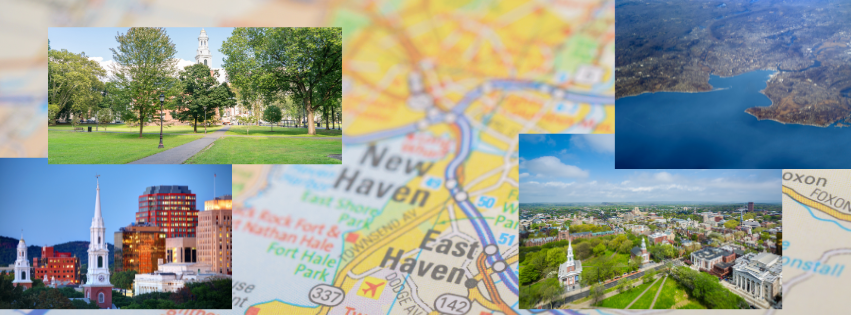
Looking for the records of ancestors residing in New Haven Colony? Here’s where to start: Records:
What were the English Civil Wars, and how did they impact Connecticut?

In the 1640s, England fell into Civil War over the rule of Charles I. After much conflict, Charles was executed in January 1649. Oliver Cromwell took over, essentially pushing England into a military dictatorship. The monarchy was restored in May 1660, with Charles II. The Wars impacted Connecticut in two ways. First, some of thoseContinue reading “What were the English Civil Wars, and how did they impact Connecticut?”
Westmoreland County, Connecticut

Founded in 1753, the Susquehanna Company sought to permit European settlement near the Susquehanna River using an argument that the area was granted in Connecticut’s 1662 charter. (Jackson Kuhl, “The Incredibly Convoluted History of Westmoreland County, Connecticut,” Journal of the American Revolution, 29 October 2014 (https://allthingsliberty.com/2014/10/the-incredibly-convoluted-history-of-westmoreland-county-connecticut/: accessed 18 April 2024). Settlement in the area beganContinue reading “Westmoreland County, Connecticut”
What is historiography, and how might it impact your Connecticut genealogy research?

Historiography’s definition is much debated, but those definitions proposed all have some overlap. In a library guide, Princeton librarian for History and African American Studies Steven Knowlton explains historiography as “In the broadest sense […] the study of the history of history (as it is described by historians). ” In 2007 article, Caroline Hoefferle explainedContinue reading “What is historiography, and how might it impact your Connecticut genealogy research?”
Connecticut Villages: What do you need to know?

Connecticut historically had a village system. Villages – which often included churches, stores, schools and more – were typically organized either (in the 18th and early 19th century) around a church or later, around industrial centers. As much of life revolved around what they experienced in the villages, our ancestor may have listed the villageContinue reading “Connecticut Villages: What do you need to know?”
The Connecticut town boundaries have changed. How do I find my ancestor’s land records?
Connecticut land records are stored in the town in which the property was located at the time the transaction occurred. They do not move as town lines change. How do you find your ancestor’s land records? If you know where the property is located today, there’s a webpage created by the Connecticut State Library thatContinue reading “The Connecticut town boundaries have changed. How do I find my ancestor’s land records?”
I can’t locate a Connecticut birth certificate. Now where do I look?
While Connecticut required birth records as early as 1641, not everyone had one. If you can’t find a birth record for your ancestor, where else might you find their birth date and place recorded?
What’s a proprietor? (and why does it matter?)

When Connecticut gave land to colonial settlers, it did not do so – as other colonies did – by issuing patents to individuals. Instead, it gave a group permission to settle on a certain area of land. These individuals, referred to as “proprietors” were responsible for establishing town governance and dividing the land among themselvesContinue reading “What’s a proprietor? (and why does it matter?)”
 Connecticut Roots by Charter Oak Genealogy