Stuck researching a Connecticut ancestor? Have you checked these sources?

Sometimes we get stuck in research simply because we don’t know where to look next. While this list is far from exhaustive – and will apply better to the colonial period – here are sources you can check to learn more about your Connecticut ancestors.

  • The U.S. Census: While Connecticut did have a colonial census, the listed names have largely not survived. A deep dive into the U.S. Census may still provide the information you need.
  • Vital records: Connecticut has had birth, death, and marriage records since the 1640s. Not every ancestor will have a record, but it’s always worth checking. Pre-1900 records are largely available on FamilySearch.
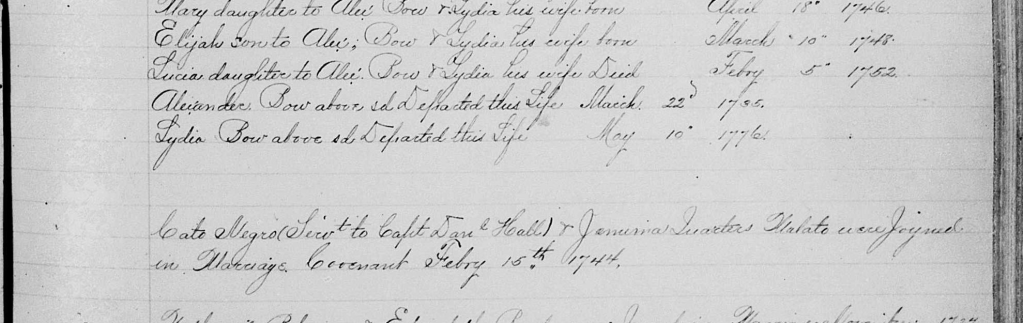
  • Church records: The Congregational Church was the establishment or state church until 1818. Not all records have been indexed, but those that have are can be found in the “Connecticut, U.S., Church Record Abstracts, 1630-1920” collection on Ancestry. Index cards created in the process of making the same publication are available on FamilySearch.
  • Land records: Land ownership became less common in the late 19th and 20th centuries, but it can be an effective way to follow the movements of earlier ancestors. Land records are stored in the office of the town clerk in which the property was located at the time the transaction occurred. Many clerks have digitized their most recent records and made them accessible through their website; many older records are available on FamilySearch.
  • Probate files: If your ancestor died with assets, they may have a probate file naming their heirs or providing family information. Many Connecticut probate records have been digitized and made available by both FamilySearch and Ancestry.

Keep in mind, these are a starting point. There are many more sources which may document your ancestors!

What does “removal” mean in a burial record?

From sexton’s books to burial transit permits, Connecticut has remarkably good civil burial records. The term removal appears in many of those records. What does it actually mean?

The term “removal” is used to indicate that the remains were moved from one town to another. If it appears in the town’s sexton’s books, it’s usually a good indication that the person died elsewhere and their remains were brought into town to be buried. The burial transit permit should confirm the locale of death.

The Hale Collection: A Resource for Cemetery Inscriptions

An outgrowth of a project to document veteran’s graves, the Hale Collection was largely compiled between 1932 and 1935. To create the collection, staffers visited the town, attempted to locate all relevant cemeteries, and transcribe the headstones. Those transcriptions were then organized into volumes by town and then by cemetery. The volumes are available on both FamilySearch and Ancestry.

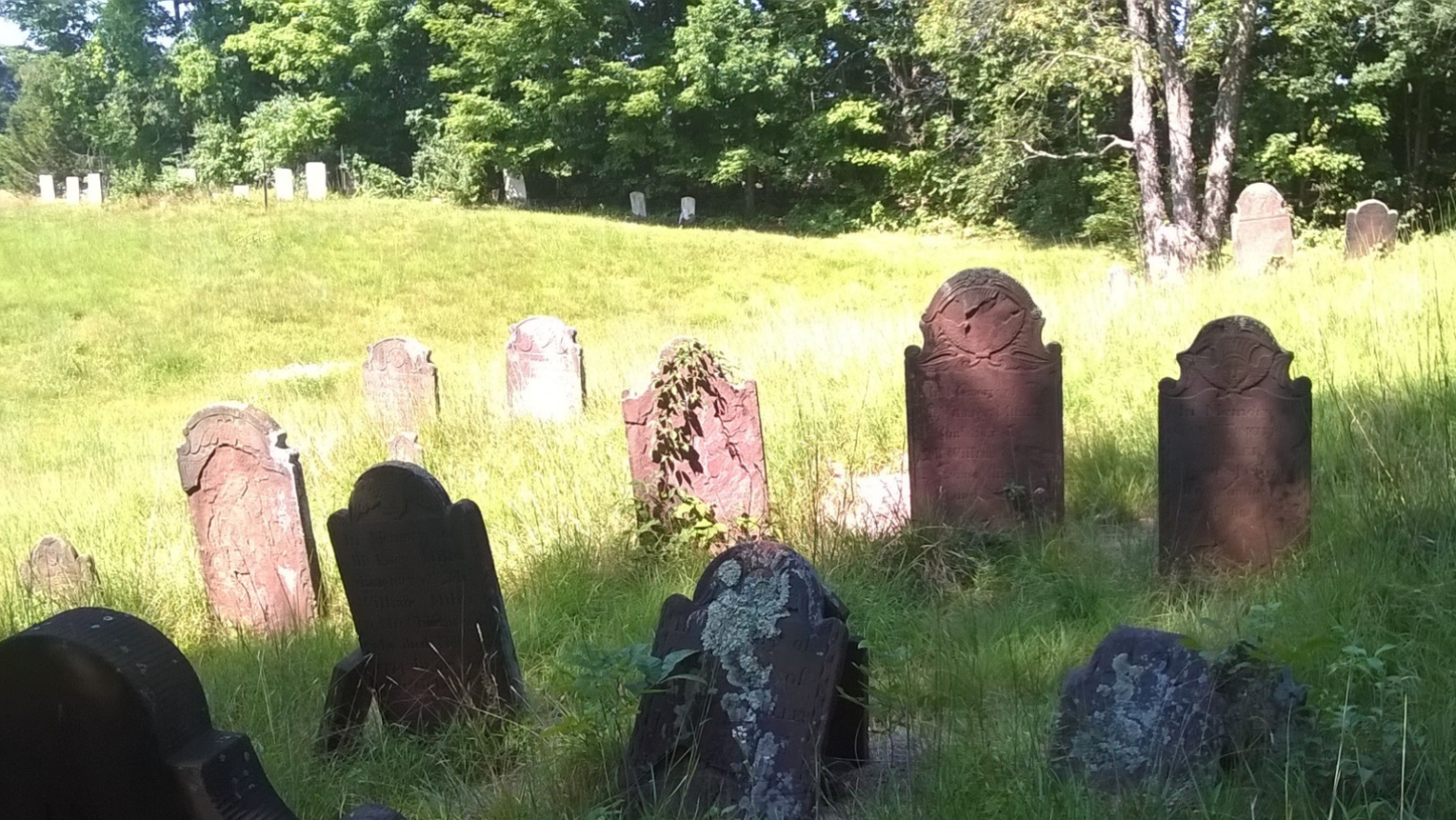
Why do researchers use the Hale Collection? Many headstones in the Connecticut River Valley are made of brownstone, a soft sandstone. In the weather extremes of recent years, the faces of many tombstones have been falling away, leaving them totally unreadable.

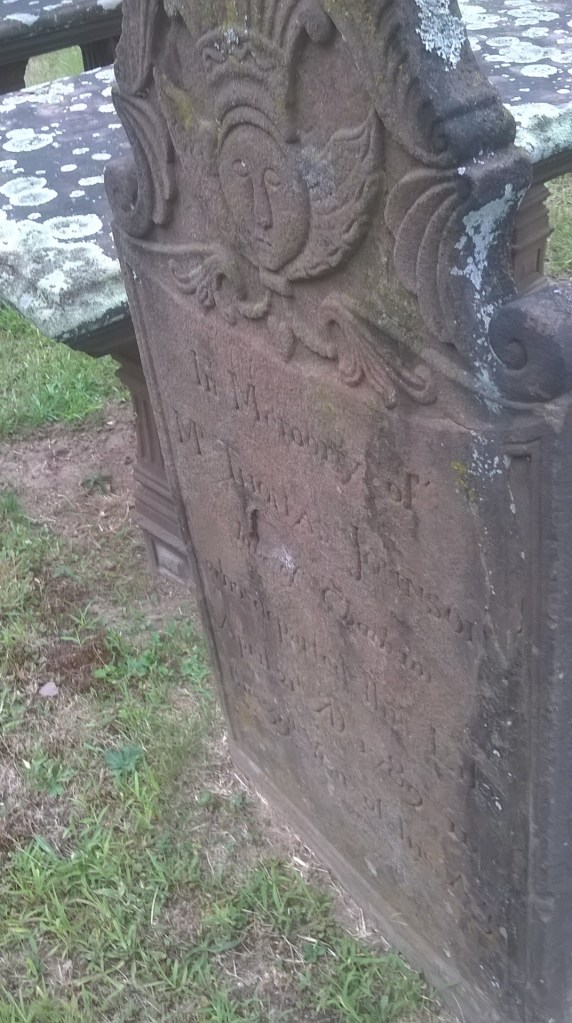
You can see where this headstone has lost some inscription.

The Hale Collection captures the inscriptions decades earlier, when they were typically far more intact. Staffers also covered all known burials in the cemetery, making it easier to locate listings than on many of the contemporary websites.

However, there are a few issues you should note. First, the Hale is a derivative source, and like all derivative sources, may contain copying errors. Second, because it is a transcription, it is impossible to date the age of the stone being transcribed and to identify any replacement stones. Finally, there is no publicly available set of instructions for recording the cemetery, so it’s impossible to tell if family groupings or burial order was maintained.

The Hale Collection only covered Connecticut, but it has left Connecticut resources with an incredibly valuable resource for learning more about our ancestors.

How do I find my ancestor’s Connecticut divorce record?

Connecticut’s statute allowing for divorce dates from 1667, created under the argument that marriage – and thus divorce – was a civil contract. The superior court system was given jurisdiction over divorce cases as early as 1784. In 1849, it officially became exclusive. Yet, many still petitioned the Connecticut General Assembly.

The Connecticut State Library has an excellent resource guide that can be used to direct you to the applicable indexes and records.

Justice of the Peace: More than just marrying people!

Today, the justice of the peace has three “official” roles in Connecticut: they can conduct marriages, take oaths, and take depositions. The institution has simplified over time. In the colonial period, the Justice of the Peace essentially functioned as a small court.

It had many of the roles it does today. Individuals could marry in front of a justice instead of in a church. Many Revolutionary War loyalty oaths were sworn in front of justices. Yet, the jurisdiction of the justice of the peace went further – and included what today would be called a small claims court. Commonly handled cases included debt, property disputes, and more.

The records of Connecticut’s justices of the peace were never centrally stored and have become quite scattered over the centuries. A good place to start looking for records is the Connecticut State Archives. If they don’t have the records of the JP who served your ancestor’s area, check with the local historical society.

How do I take my Connecticut immigrant ancestor back to Europe?

This is one of the more common Connecticut research questions. A simplified version might be “I know my family is Irish (Italian, Polish, German, French, etc.). How do I learn more about where they’re from in Europe.” The short answer: you need a European point of origin.

Expecting to find an ancestor in Europe when you know only the country is akin to trying to find an ancestor in the United States and only knowing they’re American. It isn’t really feasible. Instead, it’s worth trying to find a county or even a town.

If your ancestor arrived in the late 19th or early 20th century, these are the records that commonly include a point of origin:

  1. Vital records: If they married or died in Connecticut, their marriage or death records might include a birthplace in Europe. Be aware this is hit or miss: a significant portion contain only the country.
  2. Obituaries: Some families chose to list a European point of origin in an obituary. If there’s not one listed in your ancestor’s obituary but that obituary names siblings, be sure to look for the sibling’s obituary as well. They seem to appear more commonly in the obituaries of males.
  3. Naturalization records: If your ancestor became a citizen after 1906, their forms may include a European point of origin.

The records less commonly contain that information but may still do so:

  1. Draft registration: If your ancestor registered for the draft, their European birth place may be listed.
  2. Church records: Catholic Church records did not consistently reference prior records until the mid-20th century, but some early attempts exist.
  3. Gravestones: Mid-to-late 19th century gravestones in Irish communities may list a point of origin in Ireland.

Happy hunting!

How do I find the district probate court that holds my Connecticut ancestor’s records?

Since 1719, Connecticut has used district – rather than county – probate courts. The boundaries of the districts have changed periodically, but the records do not move with district changes. To identify the probate court that would have served your ancestor, you need to know in which district their town of residence was located at time.

Of course, there’s a caveat. You may not need to dig this deep in all instances. There’s a statewide collection of probate papers that has been made searchable by Ancestry as “Connecticut, U.S., Wills and Probate Records, 1609-1999.” It also includes some docket books, which will summarize cases. You may be able to locate some of your ancestor’s paperwork there.

If not, you’ll need to look both a) at the filmed collections of docket books (which can located in the FamilySearch catalog using the name of the town that seated the court at the time) and b) the records of the court itself. Several courts have yet to film some or all of their records.

How do you determine which town or court to check? The Connecticut State Library has an excellent finding aid at https://cslarchives.ctstatelibrary.org/repositories/2/classification_terms/7. Click on the town in which your ancestor resided. If that town never seated a probate court, you’ll pull up a history of the courts that served the area. If it did, click on the entry with “probate court records” and then scroll down to “Historical Note” to learn the jurisdictions of the various courts.

How do I locate a Connecticut birth, death or marriage record?

Adapted from a post on www.charteroakgenealogy.com.

Here’s what you need to know for Connecticut records:

  1. Records may exist going back to the 1640s – but not every family will have them. Connecticut required birth, death, and marriage records from the 1660s forward. However, the law allowed clerks to charge for recording. A family who couldn’t afford the price may not have bothered.
  2. Connecticut doesn’t have counties. Records created before 1 Jul 1897 are only accessible on the town level (although microfilm duplicates have been made and are accessible on FamilySearch and at the State Library). Records after that date exist on the town and state level.
  3. There are limitations on access. Anyone can purchase a copy of a death or marriage certificate, although certain information may be blacked out. Birth certificates are closed for a hundred years, except to certain family members and to members of an approved genealogical society.
  4. You will be asked for identification. If you order a record, be prepared to submit photocopies of your genealogy society card (if needed) and your photo identification.
  5. You will need to follow instructions for payment. Some clerks do not allow checks. Follow instructions.
  6. Where you will get the record will depend on time period:
    • If you don’t know the location:
      • Pre-1850 records have been generally been transcribed and are part of the Barbour Collection. There are versions of this collection on Ancestry, American Ancestors, and FamilySearch. If you can’t find the records you need, be prepared to check all three. Ancestry and American Ancestors have different towns included. There are a few towns missing from Barbour. See https://libguides.ctstatelibrary.org/hg/genealogyindexes/Barbour for details.
      • Post-1897 records have indexes available on the Connecticut State Library website; FamilySearch; and Ancestry.
    • Pre-1900 records have generally been digitized and are available on FamilySearch. Search the town in the catalog to access the records.
    • Post-1900 records (the exact date depends on the town, check FamilySearch to confirm) can be requested from the town clerk or city health department for $20/copy. Members of an approved genealogical society can view (but not photograph) the record without charge.
    • Still can’t find the record? You can place a request with the state vital records office (https://portal.ct.gov/DPH/Vital-Records/State-Vital-Records-Office–Home).

Rule of thumb: FamilySearch first and then the town. State only when all other options have been exhausted.

Connecticut Colonial Census Enumerations

copied from a post at Charter Oak Genealogy

To apply to a Revolutionary War era lineage society, the applicant needs to document not only the ancestor’s service but also the ancestor’s residence during the War.

For Connecticut ancestors, there are four sources typically used to “prove” residence:

  • a marriage record for a spouse; a birth or baptismal record for a child.
  • payment of taxes
  • office holding
  • land transactions

One could add a fifth: census enumerations. Even though few survive, there are scattered records of the 1776 or 1779 census enumerations. The State Library has a finding aid describing what records were available in print. The census of Newington has been transcribed online. The Connecticut Archives collection is now available on FamilySearch but must be accessed through an affiliate library.

Running a genealogy group in a Connecticut library? Here are some resources to help.

Connecticut’s libraries are amazing. And many are trying to make programs and projects happen on limited resources. If you are a library staff member or volunteer in a Connecticut library, here are some resources that can help.

  1. Money: Without a doubt, this is the biggest need for most programs! Connecticut’s community foundations are often an excellent funding resource. Don’t forget about the Quick Grants offered by CT Humanities.
  2. Databases: Even if subscription funding isn’t available, there are still options. The Connecticut State Library offers amazing resources (including subscriptions to Fold3) for Connecticut residents. A library card application is available here. FamilySearch also has a special contract category (“affiliate library” status), which can make records available for patrons that they can’t access at home. To learn more and apply, visit this site.
  3. Finding speakers: Two professional organizations for genealogists cover the Connecticut area. The first is the Connecticut Professional Genealogists Council. The second is the New England Chapter of the Association of Professional Genealogists. Do be aware that you’re paying a professional! Expect to pay the kind of rates that you would pay professionals in other fields.
  4. Questions? Don’t hesitate to ask! I’m glad to try to help.