

While there were banks in the United States as early as 1780, they didn’t become common until the late 19th century. That meant if you needed to borrow money to buy a property, you might do it from a friend, a neighbor, or the prior owner. And that can pose a stumbling block to your land records research.
This deed appears on page 13 of Volume 75 of the Waterbury, Connecticut land records (accessible at https://www.familysearch.org/search/catalog/360248?availability=Family%20History%20Library). At first glance, it looks like a deed. It’s actually a mortgage: Green Kendrick is being lent money by Enoch Hibbard.
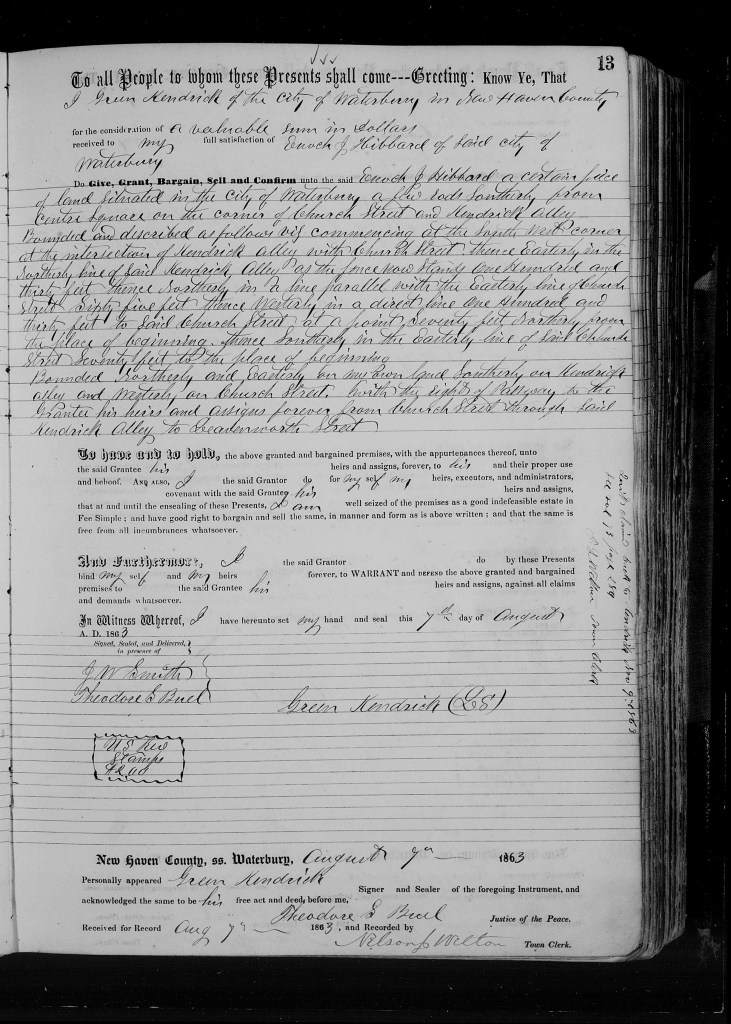
How do I know? First, the amount of the sale isn’t specified. That can sometimes illustrate a family relationship, but in this case, they specified that money was exchanged – so there’s another reason.
Second, there’s another deed.
From volume 73,
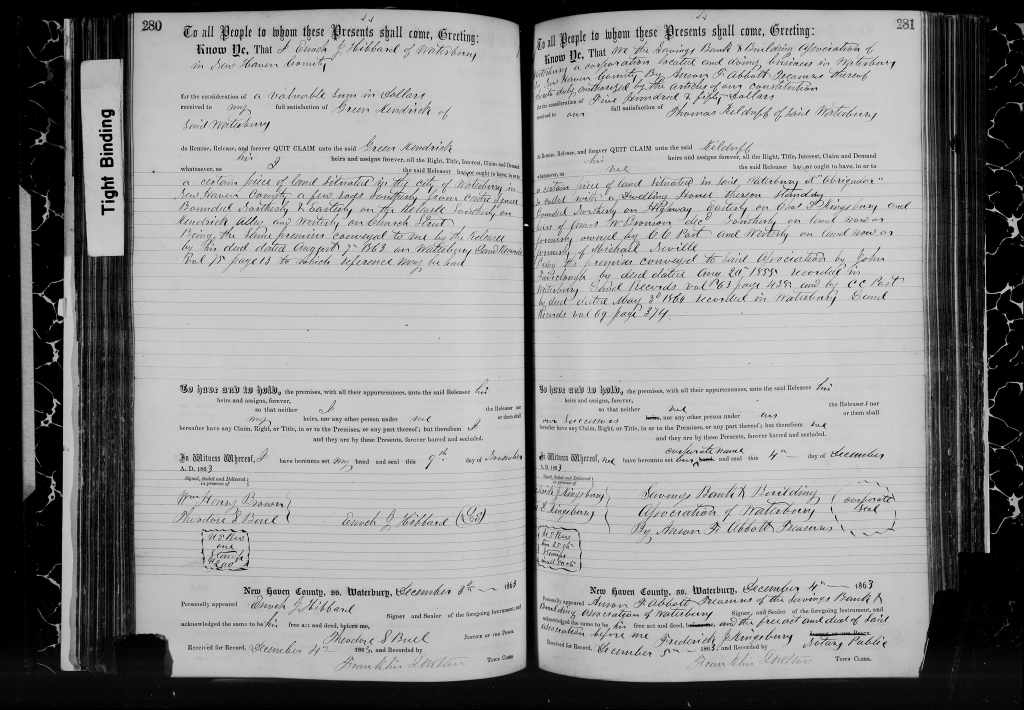
It’s dated December of the same year. This deed contains information marking it as a mortgage release: it describes Kendrick as a “releasee.” Third, there are multiple transactions between the same parties in quick succession. A property might be sold multiple times in a year, but you’d be unlikely to sell it back to the same person within a few months – or less.
Pay close attention to the details of any land sales your ancestor conducted. It can be quite challenging to differentiate between a true sale and a mortgage or a mortgage release.
 Connecticut Roots by Charter Oak Genealogy