As early as 1702, the requirement to register births and deaths included “masters” in addition to parents. Recording was inconsistent: although there was a penalty for failure to register, it’s unclear if it was ever enforced. In short, while there are only a small number of records for those held in slavery, it’s important to check for any individual being researched.
How do you do that?
In the vast majority of cases, these records are part of the vital records for the community in which the individual resided. For Middletown, I went to www.familysearch.org (already having logged in, as I know I need an account). I clicked on “Search” and “Catalog”. In the place box, I entered “United States, Connecticut, Middlesex, Middletown”and clicked the “Search button.” In the results list, I clicked on “vital records.” The last item is my point of interest. I clicked on it and was able to open digital images of the books covering births, deaths, and marriages for the period I sought.
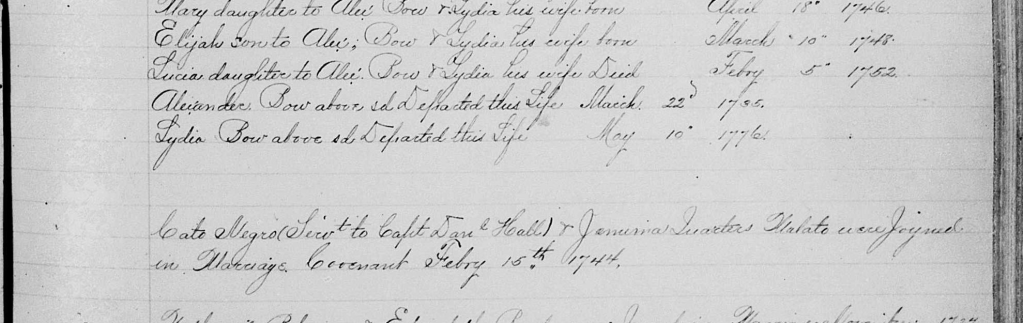
On page 53 of volume 2, I found this:
Due to the argument that the enslaved were property, some town clerks included their birth, death, and marriage records in land record books instead of the vital record books. These books are also available on FamilySearch (click on land records instead of vital records), but they typically need to be accessed from FamilySearch affiliate libraries.
Questions? Contact us.
 Connecticut Roots by Charter Oak Genealogy