
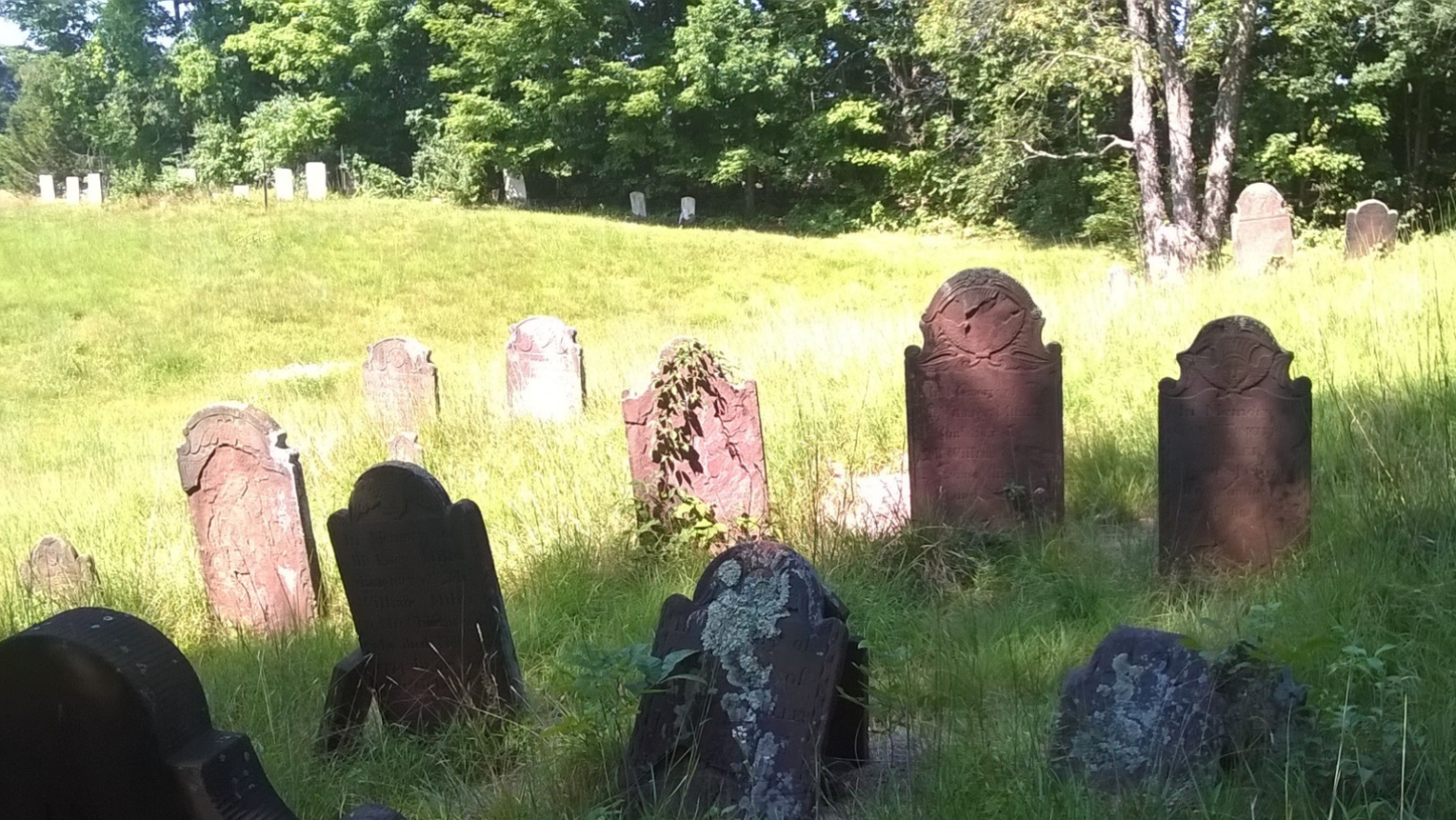
An outgrowth of a project to document veteran’s graves, the Hale Collection was largely compiled between 1932 and 1935. To create the collection, staffers visited the town, attempted to locate all relevant cemeteries, and transcribe the headstones. Those transcriptions were then organized into volumes by town and then by cemetery. The volumes are available on both FamilySearch and Ancestry.
Why do researchers use the Hale Collection? Many headstones in the Connecticut River Valley are made of brownstone, a soft sandstone. In the weather extremes of recent years, the faces of many tombstones have been falling away, leaving them totally unreadable.
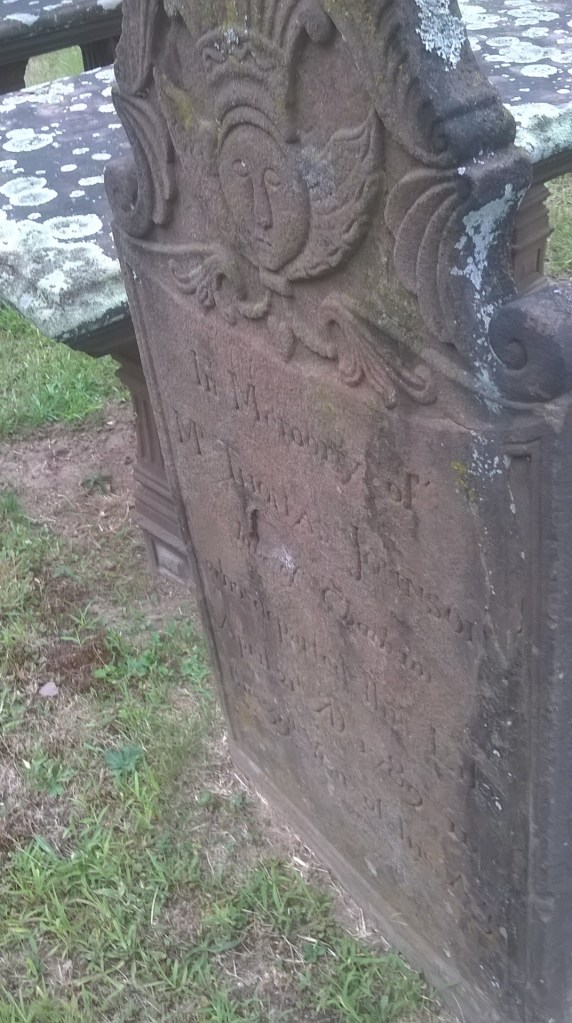
You can see where this headstone has lost some inscription.
The Hale Collection captures the inscriptions decades earlier, when they were typically far more intact. Staffers also covered all known burials in the cemetery, making it easier to locate listings than on many of the contemporary websites.
However, there are a few issues you should note. First, the Hale is a derivative source, and like all derivative sources, may contain copying errors. Second, because it is a transcription, it is impossible to date the age of the stone being transcribed and to identify any replacement stones. Finally, there is no publicly available set of instructions for recording the cemetery, so it’s impossible to tell if family groupings or burial order was maintained.
The Hale Collection only covered Connecticut, but it has left Connecticut resources with an incredibly valuable resource for learning more about our ancestors.
 Connecticut Roots by Charter Oak Genealogy